Structural Drying and Dehumidification in Brooksville, FL
Dry-looking walls can still hold water in the framing. The drying team measures, dries and re-measures until the structure matches a dry reference in the same building.
(888) 621-2041Water still spreading? Get extraction started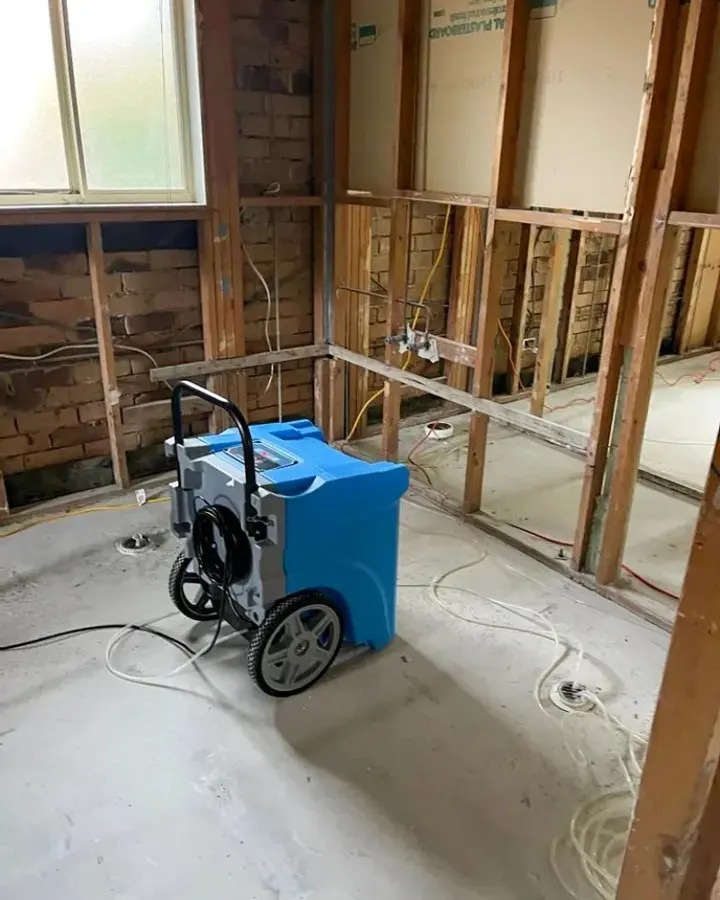
What to do right now about structural drying and dehumidification in Brooksville
Structural drying is the part of water damage restoration most people never see. After extraction, the water left in drywall, framing, subfloor and concrete has to be evaporated and pulled out of the air, and in Brooksville's humid climate that takes a planned setup, not a box fan.
Stop the source
Make sure no more water is entering the structure.
Remove standing water
Extraction comes before drying; liquid water slows everything.
Close windows
Humid outside air works against dehumidifiers.
Leave the equipment running
Do not turn off air movers or dehumidifiers between readings.
How structural drying and dehumidification is handled in Brooksville, FL
Walkthrough and moisture map
The tech who does the walkthrough finds the source of the structural drying and dehumidification, then maps moisture with pinless meters and thermal imaging so the plan matches what is actually wet.
Stop the source and extract
The extraction crew pulls standing water with truck-mounted extraction and portable units, so the water leaves the building instead of moving into the next room.
Set the drying equipment
Air movers go in at the evaporation load of each room, with LGR dehumidifiers sized to Brooksville's humid air; wet framing and subfloor get dried in place where possible.
Daily readings to the drying goal
Crews record readings daily and pull equipment only when wet materials sit within 2 to 4 points of a dry reference in the same building, then hand over the drying logs.
What does structural drying and dehumidification cost in Brooksville, FL?
In Brooksville, FL, structural drying and dehumidification typically runs $1,000 to $6,000, depending on the class of loss, how many air movers and dehumidifiers the rooms need, the number of drying days, and whether desiccant drying is needed for hardwood, plaster or concrete.
Class 1 or 2
- One or two rooms
- Air movers and LGR
- Three to five days typical
Class 3
- Ceilings, walls and floors
- More equipment per room
- Cavity drying
Class 4
- Hardwood, plaster, concrete
- Desiccant dehumidifiers
- Extended monitoring
For a planning range on your own loss, try the water damage cost calculator. A firm number comes from the on-site walkthrough.
How the drying goal is set
IICRC S500 is the industry drying standard. It starts with moisture mapping: the tech measures wet materials and also measures the same materials in a dry, unaffected part of the building. That dry reading becomes the goal. Equipment stays until the wet materials read within 2 to 4 points of it, not until the room looks dry.
- Class 1: a small area with low-porosity materials; light equipment.
- Class 2: a whole room, carpet and walls wet up to about two feet.
- Class 3: water from above; ceilings, walls and floors all wet.
- Class 4: dense materials like hardwood, plaster and concrete that hold water tightly.
Drying in Florida air
Outside air in Brooksville is humid for most of the year, so opening windows rarely helps. The drying team closes the affected area and runs LGR (low grain refrigerant) dehumidifiers that keep pulling water out of air that is already damp. Desiccant dehumidifiers come in for Class 4 materials and very humid conditions. Air movers are set to the evaporation load of each room, aimed along walls and under cabinets, and wall cavities get vent holes or targeted air when needed.
Daily psychrometric readings, temperature, relative humidity and grains per pound, show whether the setup is working. The EPA guidance on cleanup and moisture explains why drying wet building materials within 24 to 48 hours matters.
Old homes, hardwood and plaster
Brooksville's older frame homes often have heart pine floors, plaster walls and tongue-and-groove ceilings. These dense materials dry slowly and can be saved with patience and the right equipment. A contained Class 1 loss usually dries in three to five days; hardwood and plaster often take a week or more.
The EPA indoor air quality pages explain why controlling indoor humidity matters after a water loss.
How structural drying and dehumidification gets done to standard
Rapid local response
Brooksville water damage pros answer day and night, and the response team treats standing water as urgent from the first call, nights and weekends included.
IICRC S500 drying standard
The drying team follows IICRC S500, the industry drying standard: moisture mapping first, then structural drying, not just surface drying.
Claim-ready documentation
Every loss gets a moisture map, daily readings and timestamped photos, the file an adjuster reads before deciding a claim.
Hernando County water experts
Pier-built frame homes, block homes on slabs, private wells, septic systems and summer storms: local experts know how water moves here.
Water damage restoration across Brooksville and Hernando County
The Brooksville restoration crew covers the city, the ZIP codes around it and the rural roads in between, day or night.
From the brick streets downtown to the well-and-septic homes out past Lake Lindsey, water damage pros serve all of Brooksville and the Hernando County communities around it.
Coverage includes ZIP codes 34601, 34602, 34603, 34604, 34605, 34613, 34614, plus Brookridge, Royal Highlands, Ridge Manor, Masaryktown and Nobleton.
Every community and ZIP coveredRelated water damage services in Brooksville
Structural Drying and Dehumidification questions from Brooksville homeowners
Q01What does IICRC S500 mean?
It is the industry standard for professional water damage restoration, covering inspection, water categories, classes of loss, drying and documentation.
Q02How do I know the house is really dry?
Readings, not appearance. Wet materials are compared with dry reference materials in the same building until they are within 2 to 4 points.
Q03Why not just open the windows?
Brooksville air is humid most of the year. Dehumidifiers in a closed space remove more moisture than outside air can.
Q04Can hardwood floors be saved?
Often, if drying starts early. Heart pine and oak can be dried with specialized mats and dehumidification; cupped boards may flatten as they dry.
Q05How loud is the equipment?
Air movers and dehumidifiers are noisy and run day and night. Most families stay home unless the loss is large or contaminated.
Q06Who reads the meters?
The drying team visits daily to take readings, adjust equipment and log the results for the claim file.
Structural Drying and Dehumidification in Brooksville? Call now.
Every hour water sits, it wicks further into drywall, subfloor and framing. The Brooksville restoration team extracts, dries to the IICRC S500 standard and documents the loss for the claim.
(888) 621-2041Get the Hernando County drying crew moving