Crawlspace and Raised Floor Water Damage in Brooksville, FL
Older Brooksville frame homes sit on brick or block piers over a crawlspace. When water gets under the house, the mitigation team pumps it out and dries the joists and subfloor from below.
(888) 621-2041Water still spreading? Get extraction started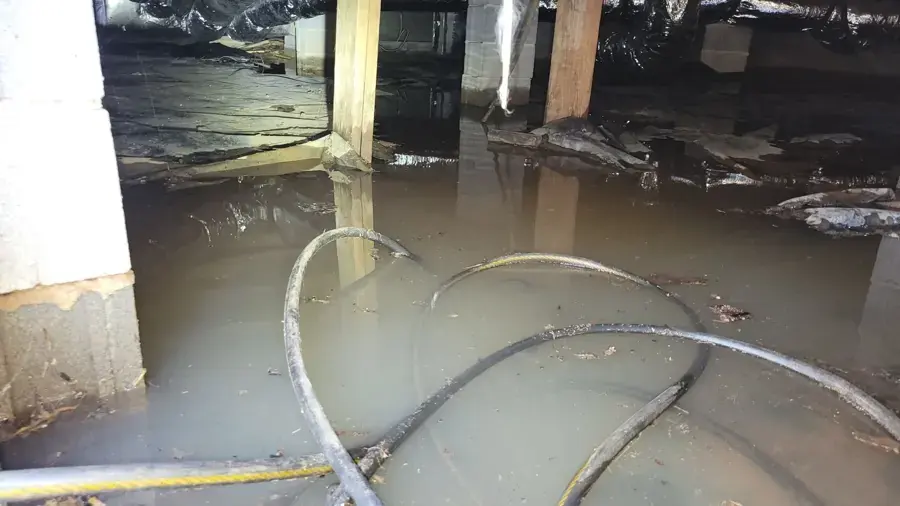
What to do right now about crawlspace and raised floor water damage in Brooksville
The oldest streets in Brooksville, around the courthouse and on the hills south and east of downtown, are lined with wood-frame homes raised on piers. That design kept houses cool before air conditioning, but it leaves plumbing, ducts and floor framing exposed in a crawlspace that can hold water.
Stop the water
Shut the main or well pump if a line is running under the house.
Stay out
Do not crawl into standing water near wiring or ducts.
Watch the floors
Note soft spots, cupping boards and musty smells, and photograph them.
Call early
Framing that stays wet for days is harder and costlier to dry.
How crawlspace and raised floor water damage is handled in Brooksville, FL
Walkthrough and moisture map
The tech who does the walkthrough finds the source of the crawlspace and raised floor water damage, then maps moisture with pinless meters and thermal imaging so the plan matches what is actually wet.
Stop the source and extract
The extraction crew pulls standing water with truck-mounted extraction and portable units, so the water leaves the building instead of moving into the next room.
Set the drying equipment
Air movers go in at the evaporation load of each room, with LGR dehumidifiers sized to Brooksville's humid air; wet framing and subfloor get dried in place where possible.
Daily readings to the drying goal
Crews record readings daily and pull equipment only when wet materials sit within 2 to 4 points of a dry reference in the same building, then hand over the drying logs.
What does crawlspace and raised floor water damage cost in Brooksville, FL?
In Brooksville, FL, crawlspace and raised floor water damage restoration typically runs $1,500 to $8,000, depending on the crawlspace size, how much insulation and vapor barrier must come out, the water category and how wet the joists and subfloor got.
Clean water, small area
- Pump-out and extraction
- Partial insulation removal
- Dehumidifier drying
Whole crawlspace
- Insulation and barrier removed
- Joists and subfloor dried
- Daily readings logged
Contaminated water
- Sewage or floodwater
- Antimicrobial treatment
- Containment and HEPA air
For a planning range on your own loss, try the water damage cost calculator. A firm number comes from the on-site walkthrough.
How water gets under a raised floor
- A supply line or drain under the house breaks, often old galvanized or cast iron.
- Water from a leak inside the house drops through floor seams and around pipes.
- Summer storm runoff coming down a hill flows under a house at the bottom of the slope.
- A clogged AC condensate line or a leaking water heater drains into the crawlspace for weeks.
The EPA flooded homes page covers cleanup of water in and under a house. Crawlspace water is easy to miss because nobody looks under the house. The first signs are usually a musty smell, cupping hardwood, a soft spot in the floor or humidity that the air conditioner cannot pull down.
How the crawlspace is dried
The extraction crew pumps out standing water, then removes what cannot be dried: soaked fiberglass insulation between the joists and a torn or buried vapor barrier. The tech measures moisture in the sill plates, joists and subfloor with pin meters. Then the drying team closes off the space, runs LGR dehumidifiers inside it and sets air movers to push dry air across the framing.
Crawlspaces in this climate stay humid, which is why closing the space during drying matters more than blowing outside air through the vents. The University of Florida IFAS extension library has background on moisture and humidity in Florida homes.
Contaminated water under the house
If the water came from a sewer line, a septic backup or outside floodwater, it is Category 3. The crew wears protective gear, removes contaminated soil debris and insulation, applies an EPA-registered antimicrobial to the framing and dries under containment. See septic and sewage backup cleanup for how Category 3 is handled.
How crawlspace and raised floor water damage gets done to standard
Rapid local response
Brooksville water damage pros answer day and night, and the response team treats standing water as urgent from the first call, nights and weekends included.
IICRC S500 drying standard
The drying team follows IICRC S500, the industry drying standard: moisture mapping first, then structural drying, not just surface drying.
Claim-ready documentation
Every loss gets a moisture map, daily readings and timestamped photos, the file an adjuster reads before deciding a claim.
Hernando County water experts
Pier-built frame homes, block homes on slabs, private wells, septic systems and summer storms: local experts know how water moves here.
Water damage restoration across Brooksville and Hernando County
The Brooksville restoration crew covers the city, the ZIP codes around it and the rural roads in between, day or night.
From the brick streets downtown to the well-and-septic homes out past Lake Lindsey, water damage pros serve all of Brooksville and the Hernando County communities around it.
Coverage includes ZIP codes 34601, 34602, 34603, 34604, 34605, 34613, 34614, plus Brookridge, Royal Highlands, Ridge Manor, Masaryktown and Nobleton.
Every community and ZIP coveredRelated water damage services in Brooksville
Crawlspace and Raised Floor Water Damage questions from Brooksville homeowners
Q01How do I know if my crawlspace has water?
Look for a musty smell, humidity the AC cannot control, cupping hardwood or soft floor spots. A flashlight check from the access hatch often shows standing water or sagging insulation.
Q02Can wet insulation be dried?
Fiberglass batts that got soaked usually sag and hold water, so they come out. Replacing them is part of the rebuild after the framing is dry.
Q03Why not just open the vents?
Outside air in Brooksville is humid most of the year. Closing the space and running dehumidifiers dries framing faster and more reliably.
Q04Does the subfloor have to be replaced?
Usually not, if drying starts early. Subfloor that delaminated or stayed wet a long time may need sections replaced.
Q05Is crawlspace water dangerous?
It can be if it is sewage, touches wiring or ducts, or has sat long enough to grow microbes. Treat unknown water as contaminated until tested.
Q06How long does crawlspace drying take?
Most crawlspaces dry in three to seven days of dehumidification, longer for heavy timbers and old heart pine. Equipment stays until readings match dry framing.
Crawlspace and Raised Floor Water Damage in Brooksville? Call now.
Every hour water sits, it wicks further into drywall, subfloor and framing. The Brooksville restoration team extracts, dries to the IICRC S500 standard and documents the loss for the claim.
(888) 621-2041Get the Hernando County drying crew moving