Ceiling Leak Water Damage in Brooksville, FL
Water coming through a ceiling can start at a bathroom, a supply line, an AC unit or the roof. The tech who does the walkthrough traces it, and the drying team dries the ceiling cavity.
(888) 621-2041Water still spreading? Get extraction started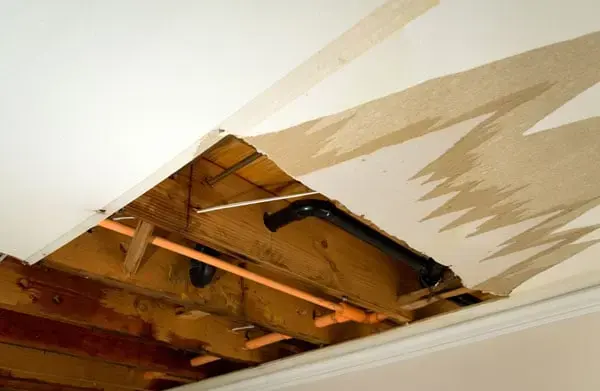
What to do right now about ceiling leak water damage in Brooksville
A ceiling stain tells you water got there, not where it came from. In Brooksville homes the usual culprits are a two-story bathroom, a supply line to an upstairs fixture, an air handler or condensate line in the attic, and the roof. Each one needs a different fix, so tracing the source comes first.
Kill the ceiling circuits
Switch off breakers for lights and fans near the wet area.
Stop the source
Shut off the fixture valve, main or AC unit feeding the leak.
Clear the room
Move furniture and keep people out from under sagging drywall.
Photograph the stain
Take photos before anything is opened or removed.
How ceiling leak water damage is handled in Brooksville, FL
Walkthrough and moisture map
The tech who does the walkthrough finds the source of the ceiling leak water damage, then maps moisture with pinless meters and thermal imaging so the plan matches what is actually wet.
Stop the source and extract
The extraction crew pulls standing water with truck-mounted extraction and portable units, so the water leaves the building instead of moving into the next room.
Set the drying equipment
Air movers go in at the evaporation load of each room, with LGR dehumidifiers sized to Brooksville's humid air; wet framing and subfloor get dried in place where possible.
Daily readings to the drying goal
Crews record readings daily and pull equipment only when wet materials sit within 2 to 4 points of a dry reference in the same building, then hand over the drying logs.
What does ceiling leak water damage cost in Brooksville, FL?
In Brooksville, FL, ceiling leak water damage restoration typically runs $800 to $5,000, depending on the size of the wet area, whether drywall and insulation had to be removed, and whether water ran down into walls and flooring below.
Small stain
- Source traced
- Ceiling dried in place
- Vent holes and dehumidifier
Sagging section
- Drywall and insulation removed
- Joist bay dried
- Walls below checked
Multi-room spread
- Several ceilings affected
- Walls and floors dried
- Extended monitoring
For a planning range on your own loss, try the water damage cost calculator. A firm number comes from the on-site walkthrough.
Finding the source
- Below a bathroom: wax ring, shower pan or supply line failures.
- Near the air handler: an overflowing condensate pan or clogged drain line, see AC condensate leaks.
- After a storm: roof or flashing damage, see roof leak water damage.
- No obvious source: a pinhole leak in a line running through the ceiling.
Thermal imaging shows the cool pattern of wet drywall and helps trace it back along the joists. Moisture meters confirm what the camera suggests before any drywall comes down.
How a wet ceiling is handled
Ceiling drywall holding water is heavy and can come down without warning, so sagging sections are released and removed under control. Where the drywall is only damp and still firm, the drying team dries it in place by opening small vent holes and moving air through the joist bay with dehumidifiers running in the room. Wet insulation above the ceiling comes out because it will not dry in place.
Water around light fixtures and ceiling fans is an electrical hazard; switch off those circuits. The OSHA flood and water cleanup page lists the electrical precautions crews follow.
Documentation for the claim
Adjusters want to know the source, when it started and what was removed. Photos of the stain before anything is touched, the moisture map, and daily readings until the joists and drywall reach the drying goal make that file. Keep any failed part, such as a supply line or drain fitting.
Wet ceilings and insulation should not be left in place; the EPA moisture cleanup guidance explains the 24 to 48 hour drying window.
How ceiling leak water damage gets done to standard
Rapid local response
Brooksville water damage pros answer day and night, and the response team treats standing water as urgent from the first call, nights and weekends included.
IICRC S500 drying standard
The drying team follows IICRC S500, the industry drying standard: moisture mapping first, then structural drying, not just surface drying.
Claim-ready documentation
Every loss gets a moisture map, daily readings and timestamped photos, the file an adjuster reads before deciding a claim.
Hernando County water experts
Pier-built frame homes, block homes on slabs, private wells, septic systems and summer storms: local experts know how water moves here.
Water damage restoration across Brooksville and Hernando County
The Brooksville restoration crew covers the city, the ZIP codes around it and the rural roads in between, day or night.
From the brick streets downtown to the well-and-septic homes out past Lake Lindsey, water damage pros serve all of Brooksville and the Hernando County communities around it.
Coverage includes ZIP codes 34601, 34602, 34603, 34604, 34605, 34613, 34614, plus Brookridge, Royal Highlands, Ridge Manor, Masaryktown and Nobleton.
Every community and ZIP coveredRelated water damage services in Brooksville
Ceiling Leak Water Damage questions from Brooksville homeowners
Q01Is a small ceiling stain urgent?
It can be. A small stain often means more water above it in the insulation, and it keeps spreading until the source is stopped.
Q02Will the ceiling have to be replaced?
Not always. Firm, lightly wet drywall can be dried in place. Sagging or crumbling drywall comes down and is replaced after drying.
Q03How is the leak found without tearing everything open?
Thermal imaging and moisture meters trace the wet area along the joists, so openings are small and targeted.
Q04Can a ceiling leak come from the AC?
Yes. A clogged condensate drain or overflowing pan above the ceiling is a common Florida source, especially in humid months.
Q05How long does ceiling drying take?
Usually three to five days once the source is fixed and wet insulation is out. Plaster ceilings in older homes take longer.
Q06Is ceiling leak damage covered?
Sudden leaks are often covered while long-term seepage may not be. Coverage depends on your policy, so it is worth checking with your own insurer.
Ceiling Leak Water Damage in Brooksville? Call now.
Every hour water sits, it wicks further into drywall, subfloor and framing. The Brooksville restoration team extracts, dries to the IICRC S500 standard and documents the loss for the claim.
(888) 621-2041Get the Hernando County drying crew moving